Custom lapel pins and badges for your artwork.
Discuss custom enamel pins and badges with Gairun. Compare decoration, back fittings and presentation so your quote covers the complete wearable item.
Drawings, artwork or a reference sample — start with what you have.
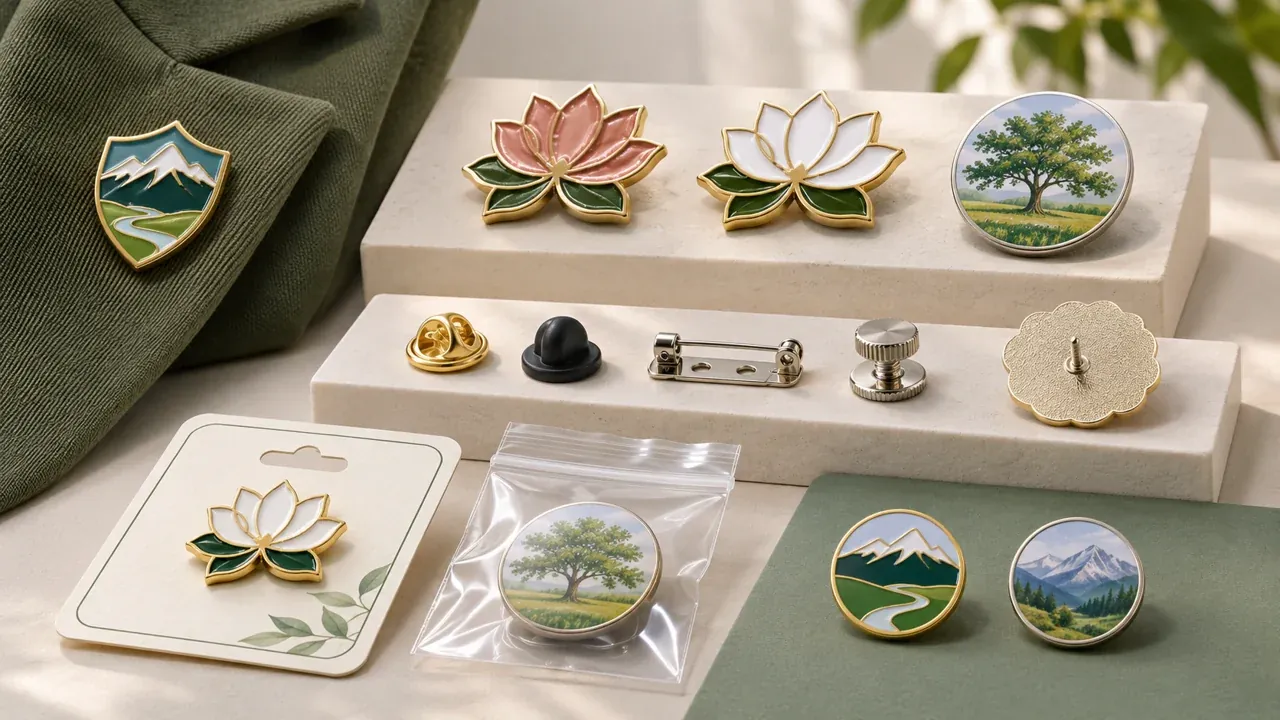
Gairun manufactures custom pins and badges from approved artwork and an agreed construction.
Compare decoration and back fittings together
A badge price should identify the metal construction, color treatment and attachment.
A familiar enamel description alone does not define the complete item.
For small text, compare a simplified metal-and-color design with a printed alternative.
Match the badge to where it will be worn
Size and weight affect how a badge sits on fabric.
Consider the viewing distance.
The outline also matters.
If the product will be handled by children or used in a children's product context, the age group and destination market must be identified before the construction and testing requirements are agreed.
The badge should be designed together with its reverse side.
Raised metal and color cells
Enamel-style designs use metal boundaries to separate colored areas.
Raised metal can provide useful contrast without adding another color.
Some shapes are suited to die casting; others may use stamping or another forming method.
A pin's commercial name does not establish which process will be used.
For three-dimensional badges, approve the modeled relief as well as the flat artwork.
Soft enamel and imitation hard enamel
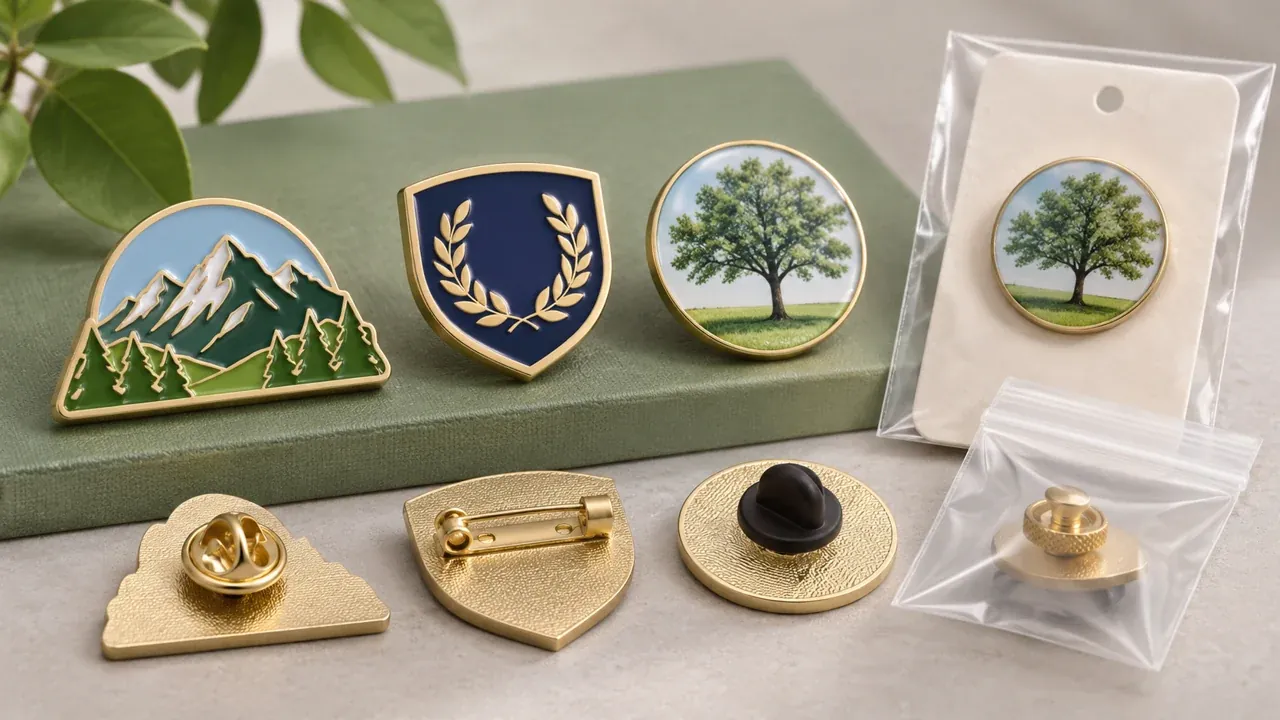
Soft enamel designs generally retain a visible difference between the metal boundaries and recessed color areas.
Imitation hard enamel uses a different finishing approach to achieve a smoother relationship between color and metal.
It should not be confused automatically with traditional vitreous hard enamel.
Choose between these routes using the intended appearance and the detail that must be preserved.
Agree the color references and review the sample under consistent conditions.
A digital proof remains essential for layout, but it does not fully establish the finished color and gloss.
Printed detail and protective coatings
Printing can be useful for gradients, fine lettering or imagery that does not translate well into separated color cells.
A clear epoxy layer can change gloss, depth and the feel of the surface.
Printed and filled designs require different inspection criteria.

Choose the attachment before tooling
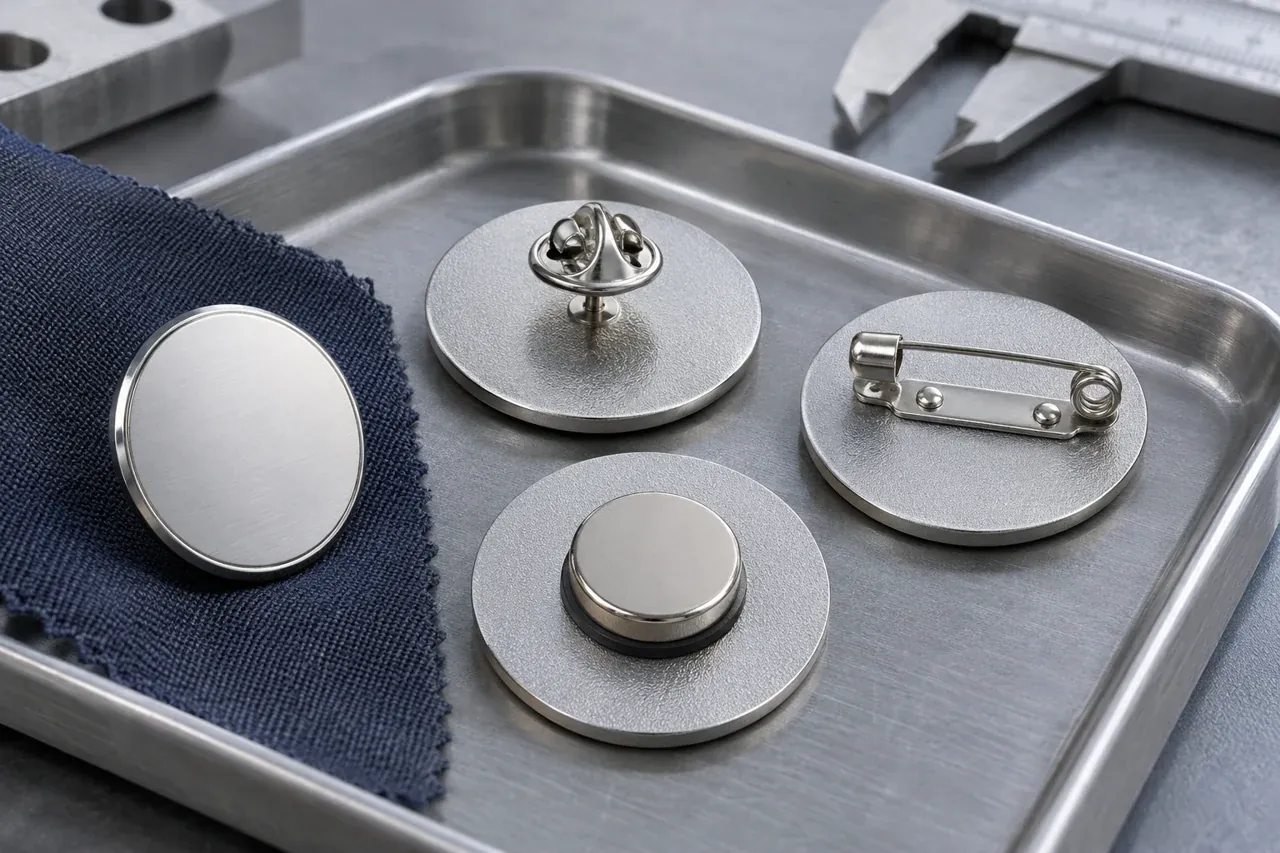
Butterfly clutches, safety-pin fittings, magnetic attachments and other constructions suit different uses.
Posts must be positioned to hold the badge as intended.
Magnetic assemblies introduce retention, polarity and user-context questions.
Specify whether the attachment is supplied assembled and how it is protected in packing.
Protruding posts can damage neighboring products or backing cards if the packing method does not account for them.
Inspect the front and the back
The front should meet the agreed artwork, relief, color and finish reference.
Use an approval sample that includes the selected attachment and decoration.
A visual check alone does not demonstrate retention under repeated use.
Prepare artwork and distribution details
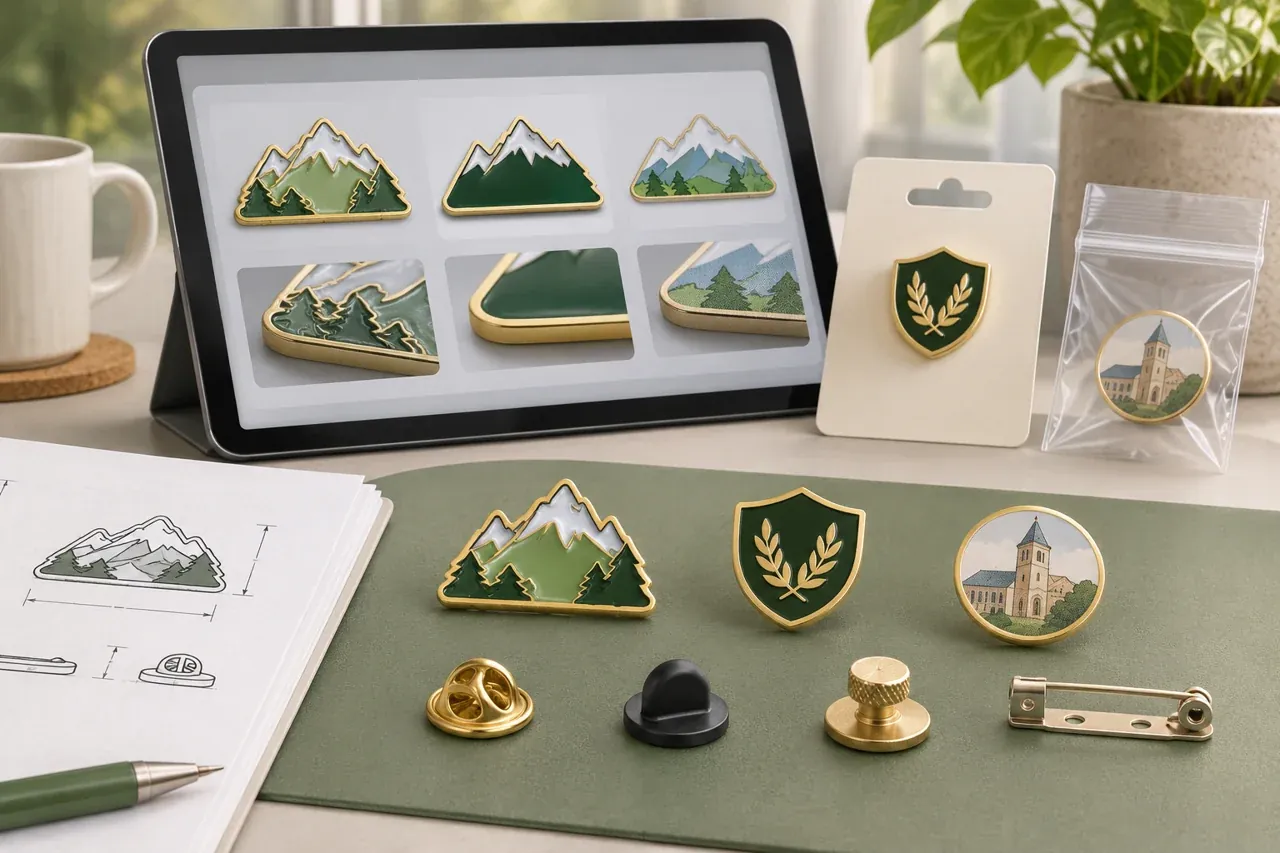
Send the artwork, dimensions, quantity, preferred decoration, finish and attachment.
Include the intended user group, destination market and packaging requirements.
Request a pin or badge proposal with artwork, actual size, attachment and quantities.