Custom pneumatic valve bodies.
Review custom pneumatic bodies with air circuits and port definitions. Clarify machining, cleaning, seals and leak-test responsibilities in the quotation.
Drawings, artwork or a reference sample — start with what you have.
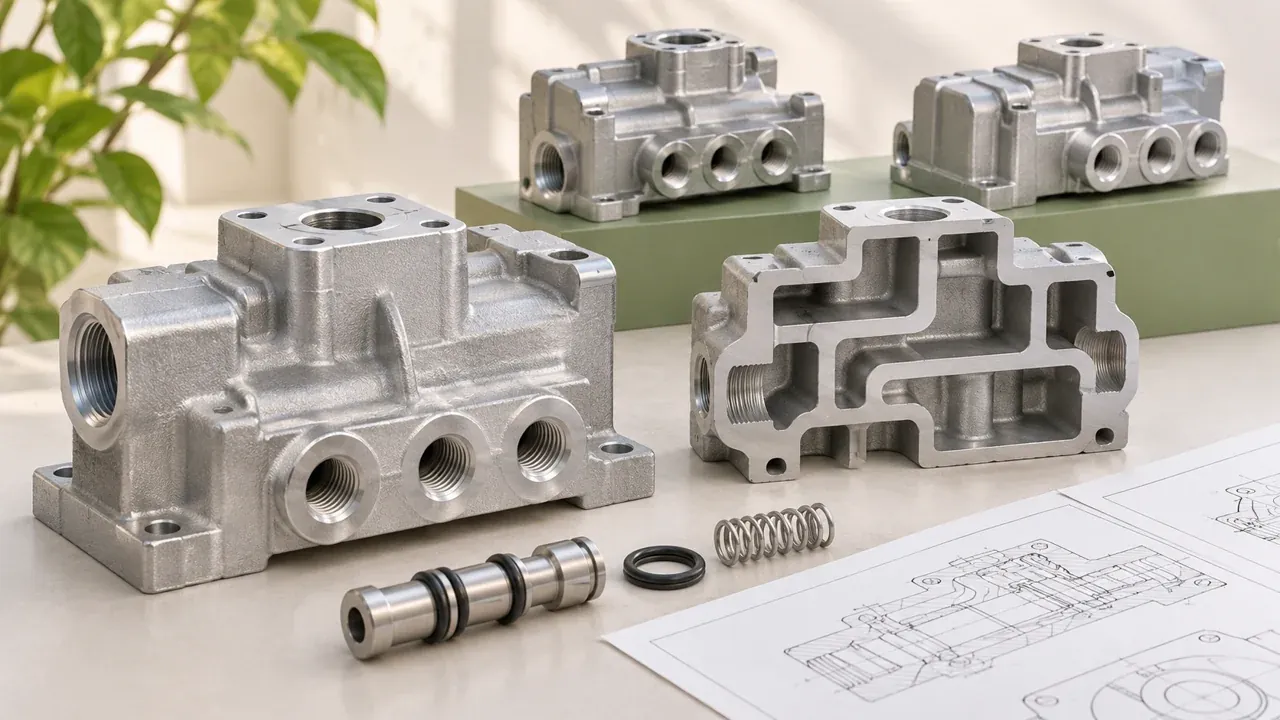
A zinc pneumatic valve body enquiry should define the air circuit, ports, sealing surfaces and actuator interface.
Price the body after its required operations
Identify drilled passages, threaded ports, sealing-face machining and cleaning as part of the final supply condition.
For several circuit variants, record which ports or passages change and whether they share an exterior.
Similar-looking bodies need distinct identification so they do not enter the wrong valve assembly.
Define the air circuit
Identify the supply, working and exhaust connections and the passages between them.
Explain which walls separate pressure zones and which features merely support an actuator or cover.
The pressure boundary should be clear in the drawing or accompanying assembly information.
Provide the operating range, pressure changes and expected duty.
Include conditions that occur during startup, shutdown or maintenance if they affect the component.
Air quality can matter as well as pressure.
Ports and internal features
Specify port thread forms, depths and locations using the required standards and drawing conventions.
The supplier should not infer the sealing method from the appearance of a threaded opening.
Internal passages need a practical production route.
Where a moving element operates inside the body, define the relevant bore and alignment requirements.
A general external dimensional check does not establish correct internal operation.
Sealing after casting and machining
Seals need controlled supporting geometry.
The proposed finish must be compatible with the seal and must not introduce uncontrolled dimensional changes.
Material removal can expose internal porosity.
Separate internal leakage from leakage to the outside.
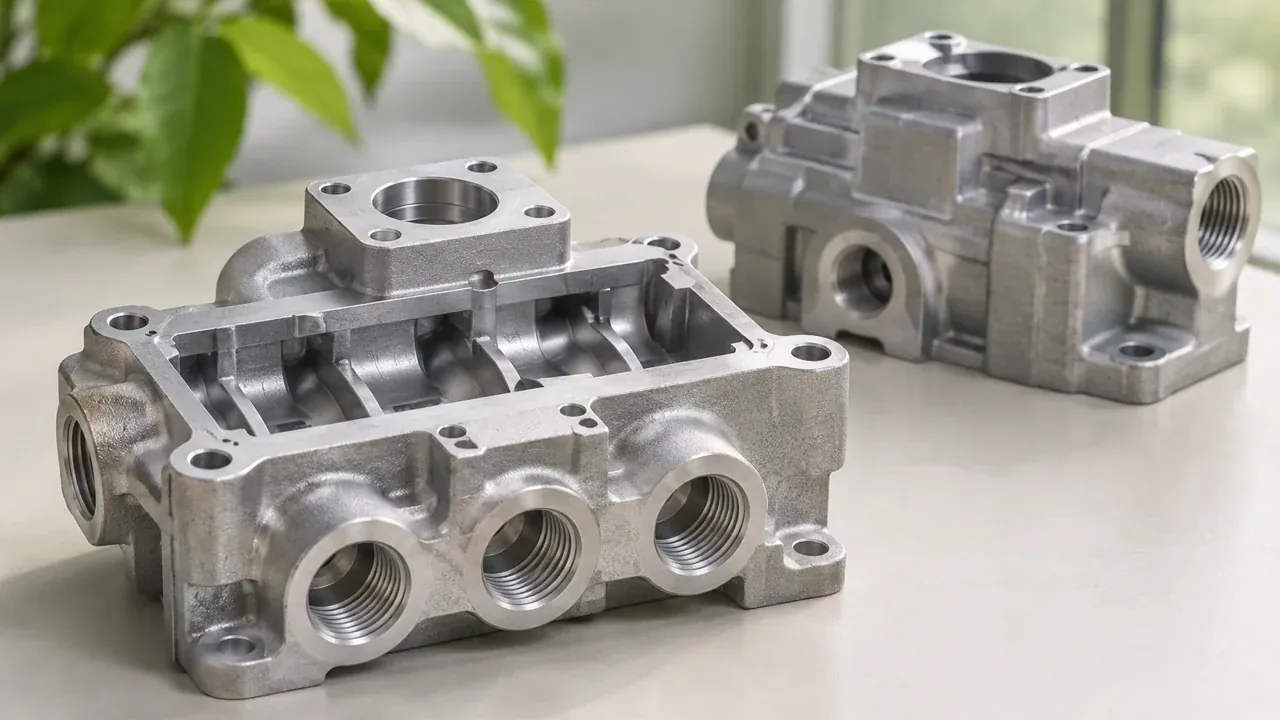
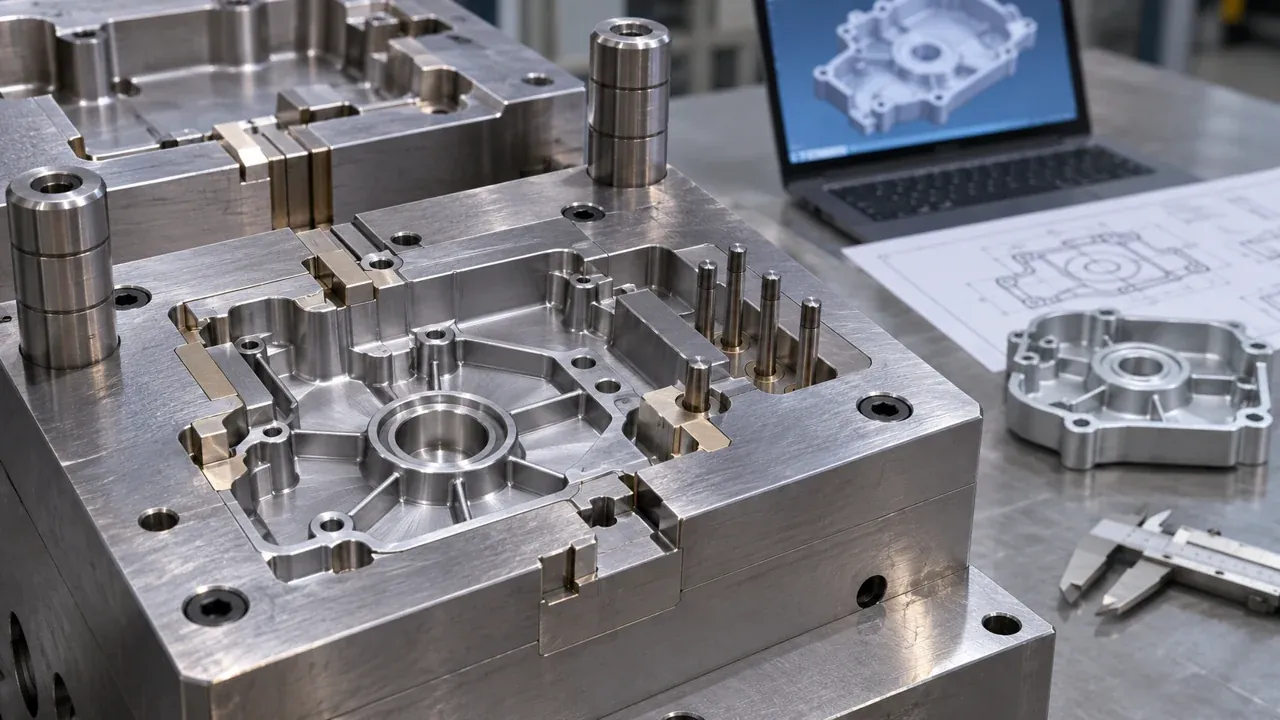
Air quality and surface condition
Loose particles, machining residue and finishing contamination can interfere with small passages or moving elements.
An instruction to wash the parts does not establish a measurable cleanliness result.
If a coating is proposed inside the circuit, assess its adhesion, compatibility and dimensional effect.
Protect cleaned parts through handling and packing.
Caps, covers or other protective methods should suit the ports and should not leave residue that compromises the assembly.

Leak checks and functional trials
Define the test medium, pressure conditions, stabilization and acceptance criterion through the responsible engineering team.
A visual observation of no obvious bubbles is not automatically equivalent to a specified quantitative leak test.
Functional validation should use the intended seals, internal elements and actuator arrangement.
Check operation across the conditions that matter to the product.
Record the tested configuration and any changes after sampling.
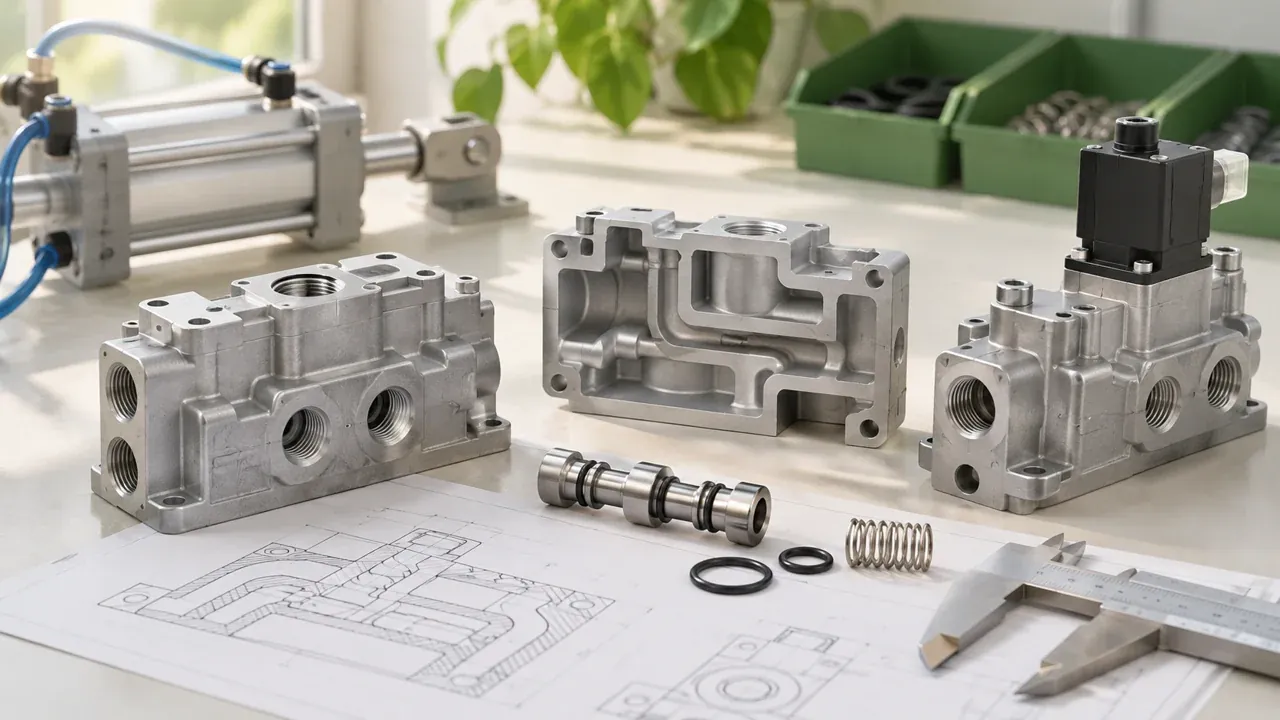
Submit the pneumatic body package
Provide a sectional drawing or model showing the circuit, ports, sealing features and mating elements.
Request a pneumatic body scope review with sections, port definitions and the required supplied condition.