Custom metal fittings for industrial fluid applications.
Assess a custom zinc fitting against its medium and service conditions. Define threads, seals, machining and testing before comparing production prices.
Drawings, artwork or a reference sample — start with what you have.
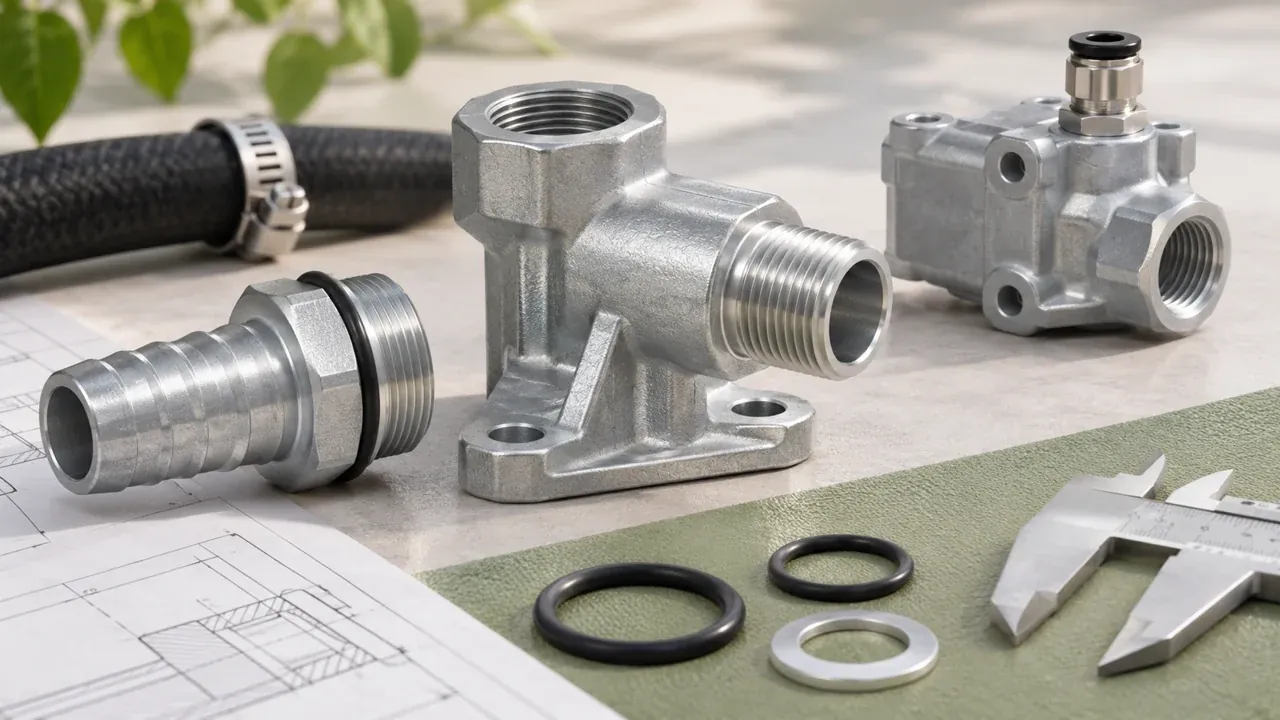
A custom zinc fluid fitting enquiry should identify the medium, connection and operating conditions before a casting route is selected.
Suitability for pressure service must be established for that design.
A successful dimensional sample alone does not prove leak resistance or service durability.
Compare the fitting in its final supplied condition
Identify threaded machining, sealing-face preparation, coating, cleaning and any supplied seals.
For an existing fitting, provide the governing drawing and connection standard with the mating hose or port.
If those requirements rule out zinc, resolve the material decision before purchasing a tool; a familiar fitting shape is not evidence that every medium or pressure is suitable.
Name the connection and medium
Specify the fluid or gas, including relevant additives, contaminants and cleaning agents.
The material and finish must be compatible with the actual exposure.
State operating temperature, pressure conditions and the expected duration or cycling.
Include installation and maintenance conditions where they can load or expose the part differently.
Identify whether the fitting is intended for ordinary industrial service, potable water, a regulated fluid system or another controlled application.
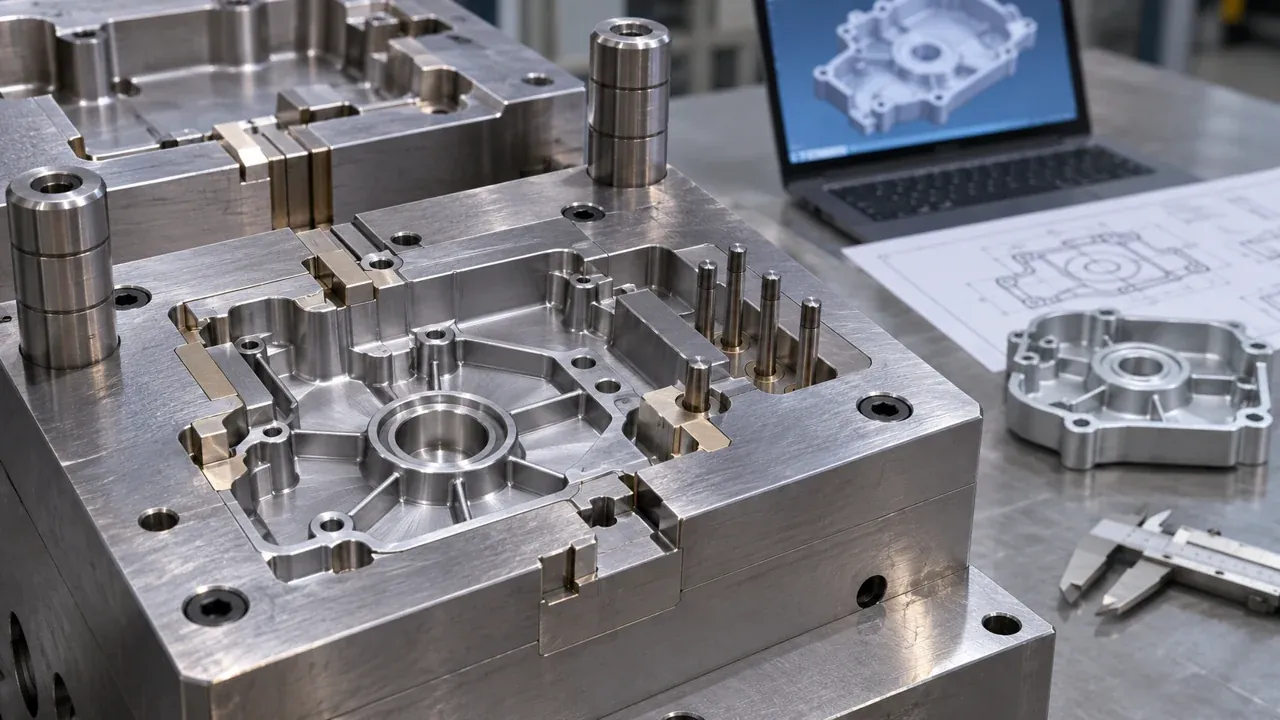
Thread form versus sealing method
A thread can locate or clamp a joint without being the element that creates the seal.
Provide the actual thread designation, fit requirements and reference standard.
The drawing should also identify lead-in geometry, engagement length and any surfaces that must remain free of coating or damage.
Machined threads may need gauges or other inspection methods suited to the requirement.
A trial with one mating part can be informative but may not establish full interchangeability.
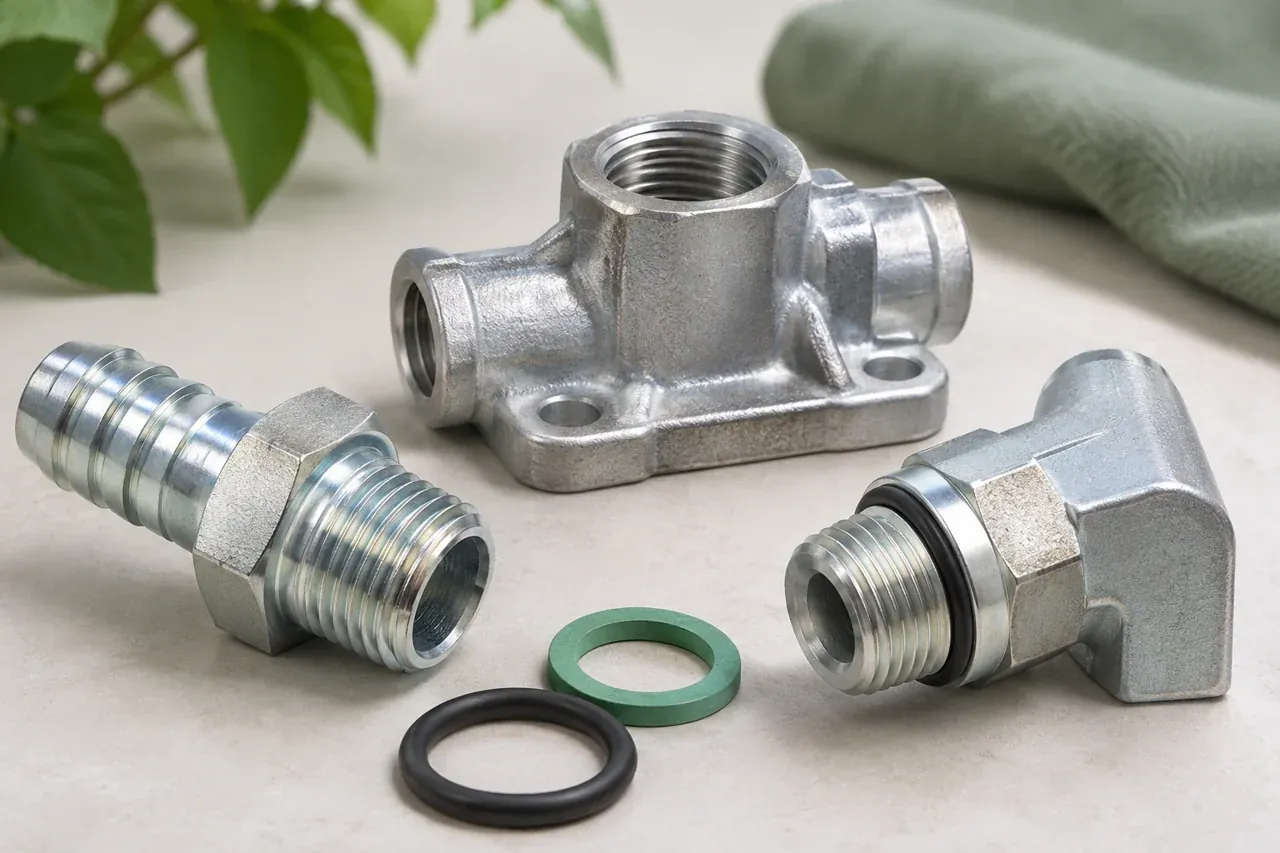
Hose retention and external loads
For hose fittings, provide hose dimensions, material and the retention system.
The fitting cannot be evaluated independently of the hose and attachment method.
External bending and pulling can act on the connection even when internal pressure is modest.
Edge condition matters where the metal contacts a flexible material.
A feature designed to retain a hose should not cut it unpredictably during installation or service.
Material and coating compatibility
The selected zinc alloy should be assessed against the medium and service conditions.
Consider contact with other metals and the environment around the installed joint.
Internal coatings require particular attention to continuity, adhesion and contamination risk.
A familiar finish name does not establish compatibility with the system fluid.

Proof, leak and assembly tests
Agree the test program with the responsible product engineer.
A brief pressure check does not demonstrate all long-term behavior.
Reports need to identify the actual fitting, hose or mating part, finish and assembly method.
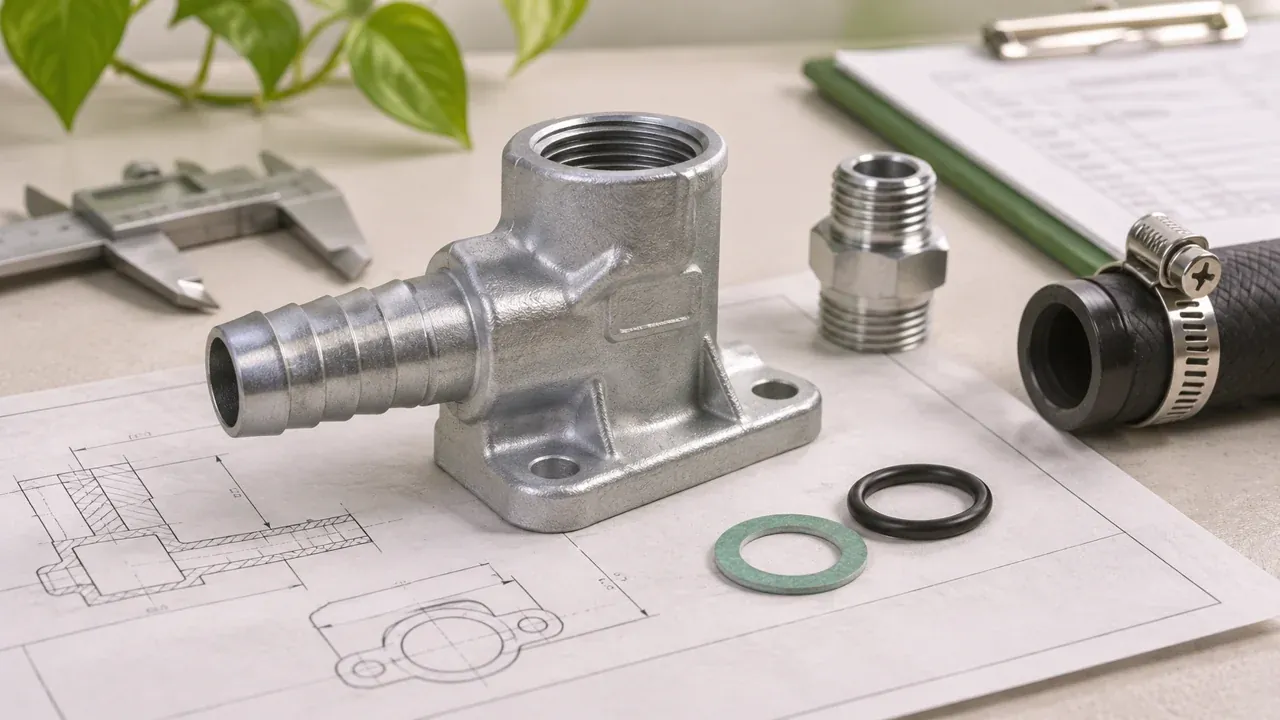
Specify a fitting for review
Send a model or sectional drawing, connection standard, medium, operating conditions and the intended mating parts.
Include expected demand, finish, assembly scope and required inspection documents.
Submit the fitting drawing and service conditions to establish whether a zinc route merits further development.
Define the final connection, cleaning and test scope before asking for production pricing.